
An escape of liquid is one of the more common residential claims the TDR team attends, and one of the most manageable when it is dried out properly and quickly. Drying that runs too slowly gives mould the conditions it needs, and once mould is present, every step that follows has to be handled with containment in mind.
TDR was engaged to take over the remediation of a two-storey home on the north side of Brisbane after mould developed during drying works carried out by another restoration company. By the time our team arrived, the contamination had travelled well beyond the level that originally got wet.
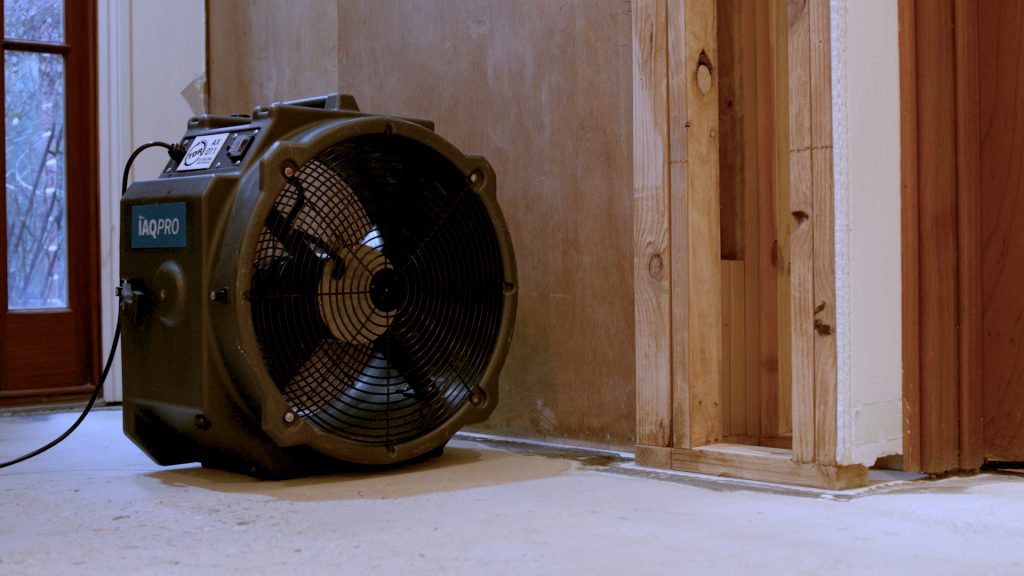
The loss began with an escape of liquid in the downstairs bathroom, with water running through the whole of the lower level of the property. A builder had been engaged to manage the repair and another restorer attended site to carry out the drying. That drying was unfortunately not completed quickly enough, and mould developed across the affected areas while the equipment was still running.
A demolition crew stripped out the lower level without building containment around the staircase, which left dust and debris free to travel up the stairs and into the top floor of the home. Upstairs had never been touched by water, but it was now cross-contaminated.
Our assessment identified the additional works this created:
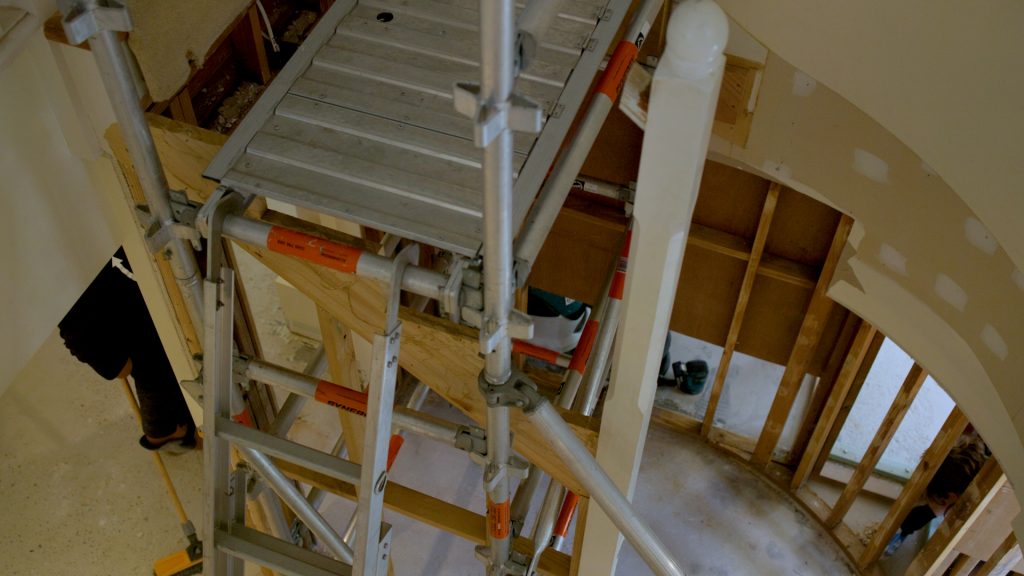
Access was a challenge in its own right. The staircase had been removed by the builder because of the water damage it sustained, leaving no safe way between the two levels. Before remediation could start, our team built scaffolding through the stairwell so crews could move up and down safely while carrying tools and equipment.
With the site established, the priority was stopping any further movement of contamination between areas and breaking the property into sections that could be worked and cleared one at a time.
Our team built five containment zones:
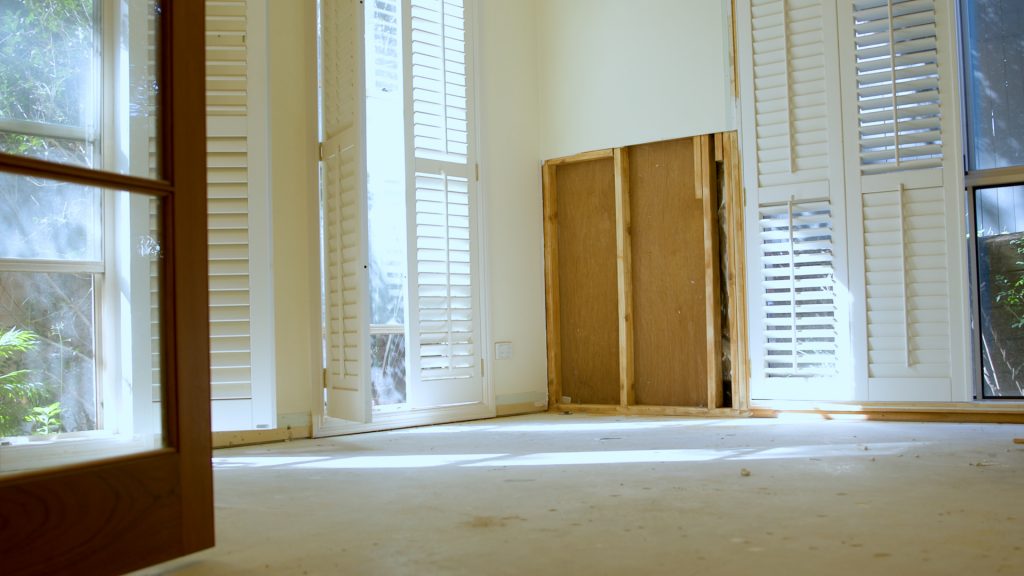
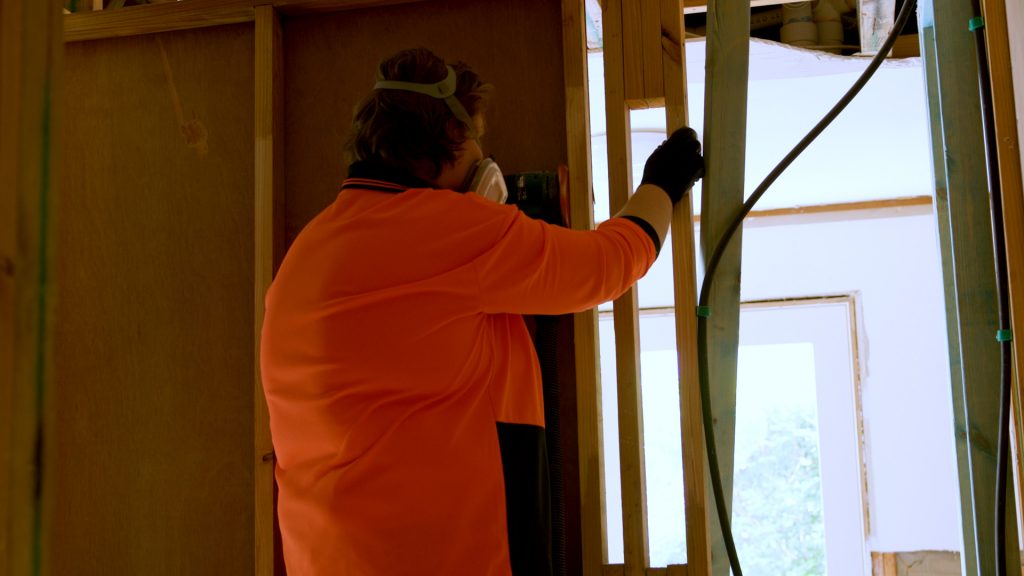
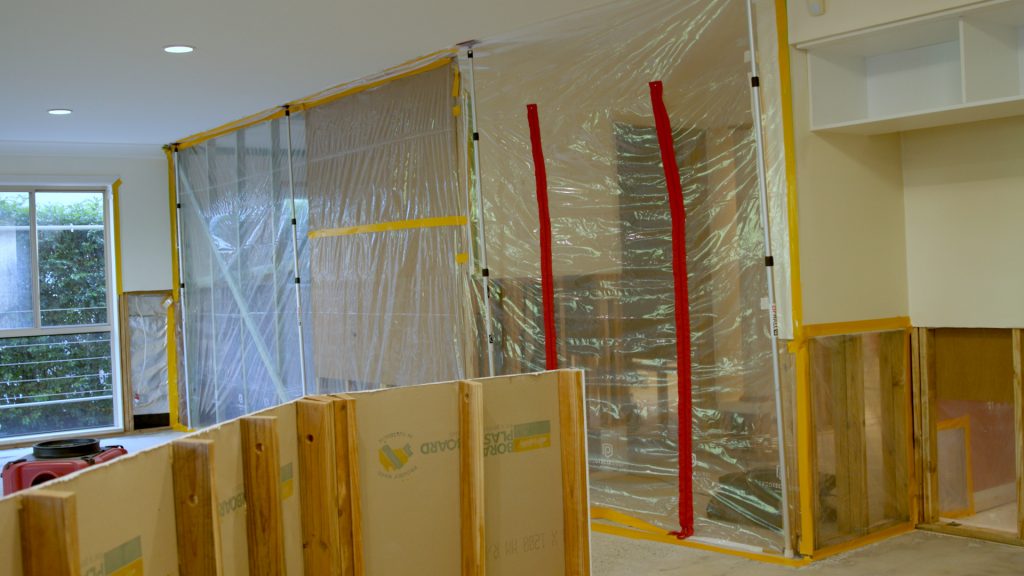
Although the contamination had spread widely, the mould growth itself was limited, sitting in the surface of the exposed timber rather than embedded through the framing. Hand sanding was enough to remove them, and there was no case for a heavier method such as dry ice blasting. Matching the technique to the actual condition of the substrate kept the cost of the works down without any compromise to the result.
Our team completed a quality check of every zone before anything was handed over. We then engaged an independent third party to attend the site and carry out post-remediation verification, including inspection, clearance testing and surface sampling. More than 20 samples were taken across the property to confirm the work met the required standard.
With clearance achieved, the site was handed back to the builder to continue the repair and rebuild.
At TDR, taking pride in our work means aiming for the best possible result for every party involved, which means looking at the bigger picture of the claim rather than the scope directly in front of us.
After recovering the property and assessing our team’s work against high industry standards, we engaged an independent third party to conduct a post-remediation verification clearance. Ensuring an unbiased analysis for all parties involved, this process represented the collective interests of the remediator, builder, insurer and/or insured. To clearly indicate any remaining contamination, the testing process required samples of surface and air particles to be tested in each unit.