If you are a property owner standing amidst the aftermath of a fire, your first instinct is likely to search for fire damage cleanup. You want the soot gone, the smell eliminated, and your life returned to normal as quickly as possible.
However, for the insurance builders, loss adjusters, and claims managers tasked with the rebuild, this “cleanup” is much more than a cosmetic exercise. It is the most critical phase of the entire claim. In the world of commercial fire damage restoration, a botched handover doesn’t just cause a delay; it erodes profit margins and creates long-term liability.
The Builder’s Friction: The Cost of a Poor Handover
The “sea of sameness” in the restoration industry often leads to using general cleaners who lack IICRC certification. They might wipe down visible surfaces, but they leave behind the invisible killers of a construction schedule:
- Hidden Soot & Particulates: Soot trapped in HVAC systems or behind wall cavities can permeate through new paint weeks after the builder has finished.
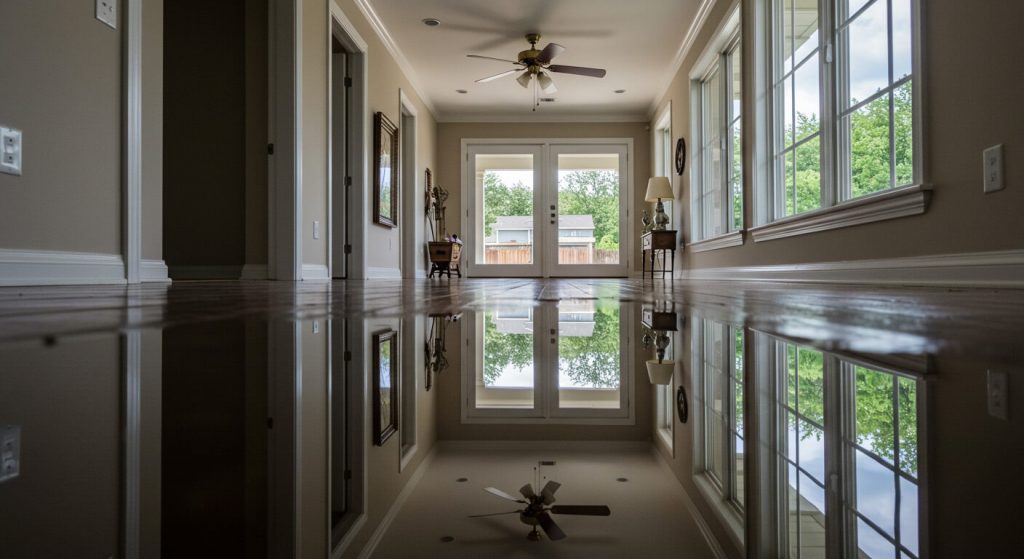
- Structural Moisture: Firefighting efforts often leave thousands of litres of water trapped in the building’s bones. If this isn’t verified as dry, you are installing new plasterboard over a future mould colony.
- Ambiguous Scope of Works: Without a clear fire damage scope of works, builders inherit unknowns that lead to constant variations and friction with the insurer.
The TDR Standard: A Protocol for Professional Handover
At Total Disaster Recovery, we view ourselves as a specialist peer to our insurance builder partnerships. We don’t just clean; we prepare a site for a seamless transition using our proven 5-step process:
- Assess: We carry out forensic-level testing to identify the full extent of smoke, soot, and water migration, with invasive investigations undertaken where approved.
- Mitigate: Immediate action is taken to prevent secondary damage. This may include, where required but not limited to, dust and debris cleaning; make-safe cleaning of items such as windows, handles, taps, fixtures, and fittings that may be affected by the corrosive nature of soot; basic strip-out works; installation of containment measures; airborne contaminant filtration through the installation of HEPA air scrubbers; structural drying; and odour control implementation.
- Scope: We provide a transparent, evidence-based restoration to builder handover document. This gives the builder a verifiably safe and ready site.
- Recover: Using IICRC-compliant techniques, we remove all identified contaminants through a combination of controlled strip-out works and specialised cleaning methods. This includes the removal of affected materials where required, detailed cleaning of remaining structural elements, and ongoing monitoring. We provide comprehensive, documented drying logs to verify that moisture levels have been returned to acceptable standards and that the structure is suitable for reconstruction. Where required or requested, a Post-Remediation Verification (PRV) is also provided by an independent IEP.
- Review: We ensure all stakeholders are aligned before the builder even hammers a nail, reducing the risk of mid-project surprises.
Certainty for Your Next Project
A seamless repair starts with a perfect handover. By choosing a partner that understands the technicalities of structural drying and soot removal, you protect the project’s timeline and your bottom line.
Get the certainty you need to slash your claim lifecycles and headaches. For a definitive restoration-to-builder handover, contact us today.